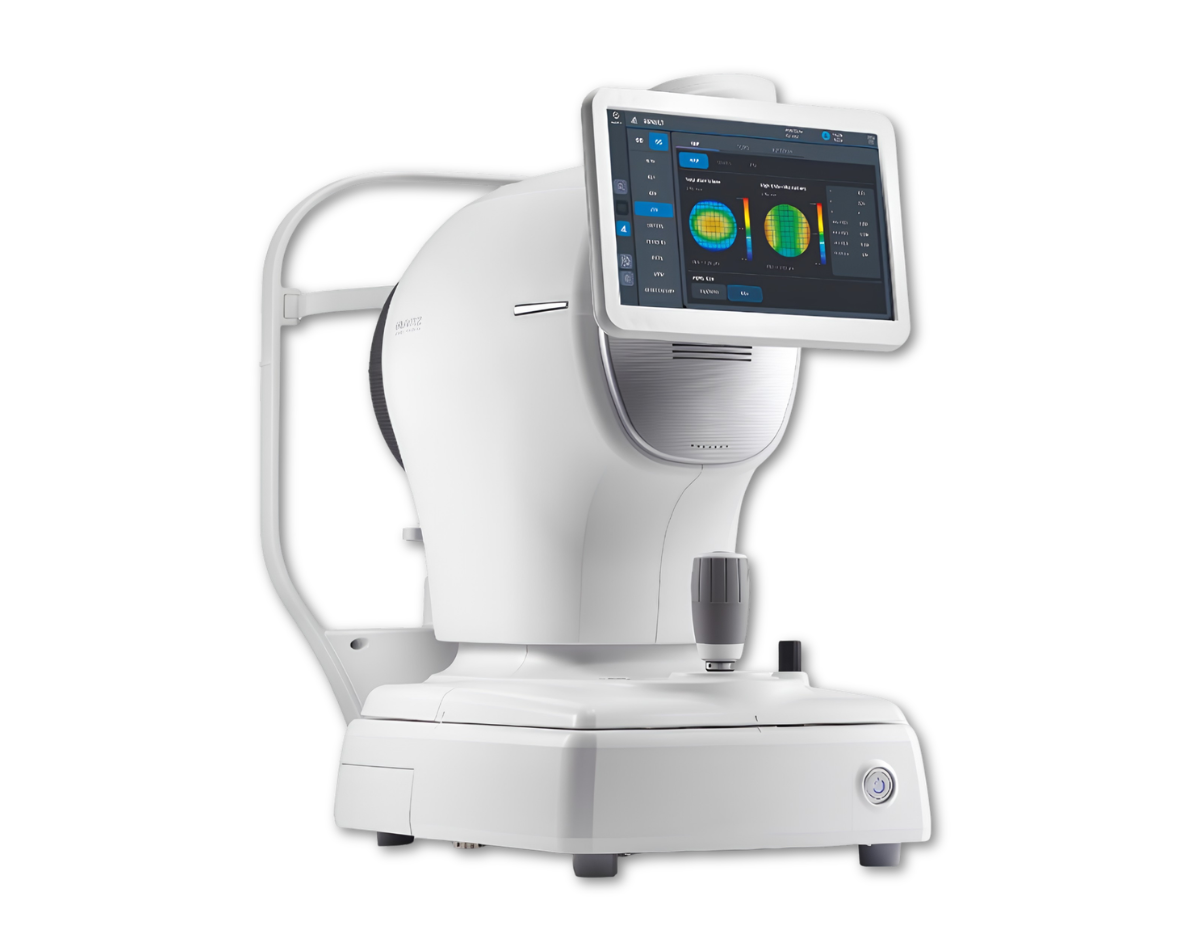
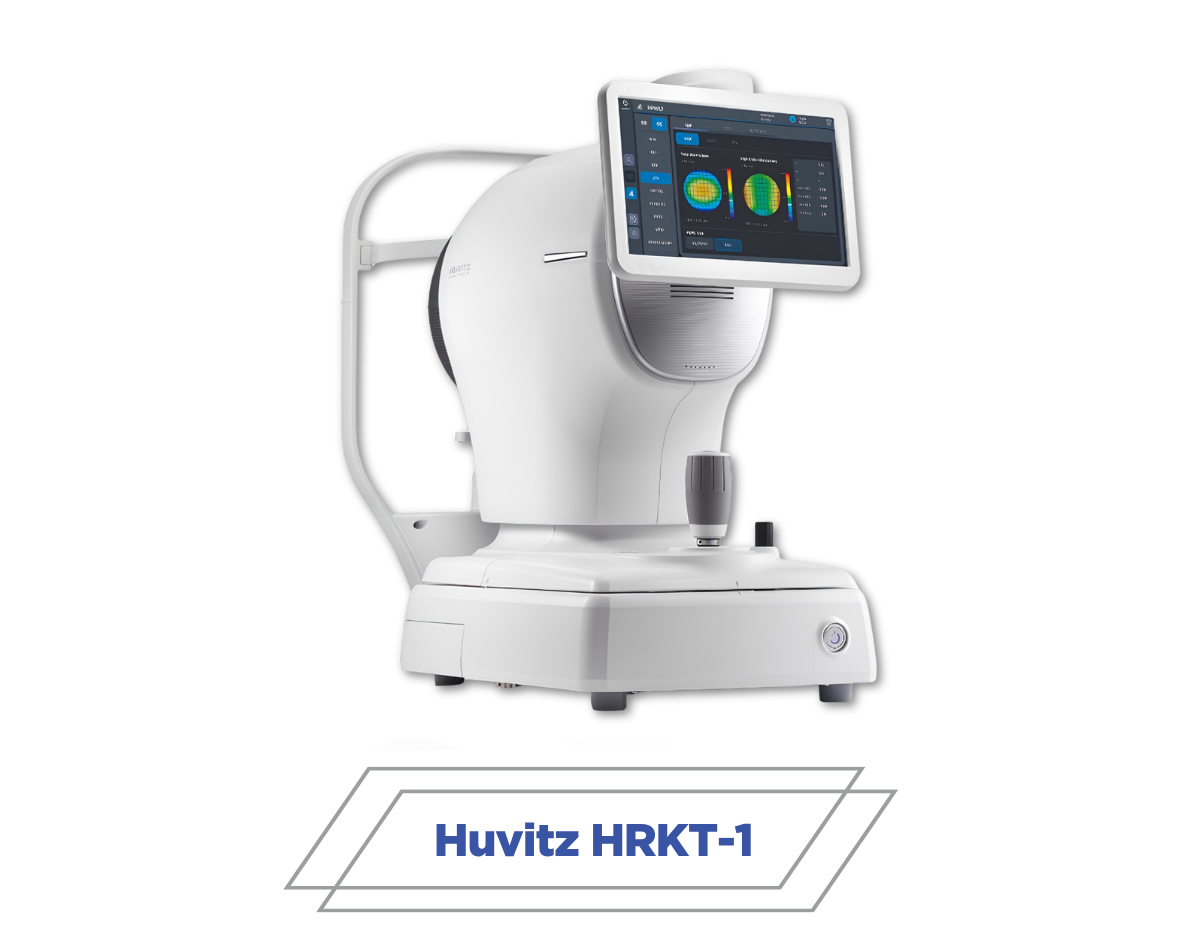
Huvitz HRKT-1

Auto Refractor/Keratometer, Corneal Topographer & Dry Eye Analyzer

The Huvitz HRKT-1 is a multifunction diagnostic platform that combines objective refraction and keratometry, corneal topography, dry eye assessment, and visual quality analysis in one device. Designed to bring traditionally separate measurements into a more connected workflow, the HRKT-1 allows practices to evaluate refractive, corneal, tear-film, and optical-quality data from a single platform.

Its 24-ring Placido topography system with more than 100,000 analysis points provides detailed corneal data for assessing shape, curvature, irregularity, and power distribution. Combined with integrated Ref/K measurements, dry eye testing, and wavefront/Zernike analysis, the HRKT-1 provides clinicians with additional context for applications ranging from routine refraction and corneal assessment to contact lens fitting, Ortho-K evaluation, dry eye assessment, and visual-quality complaints.

By bringing these capabilities together in one system, the HRKT-1 helps simplify patient movement between instruments and creates a more connected path from measurement to clinical interpretation and patient consultation.
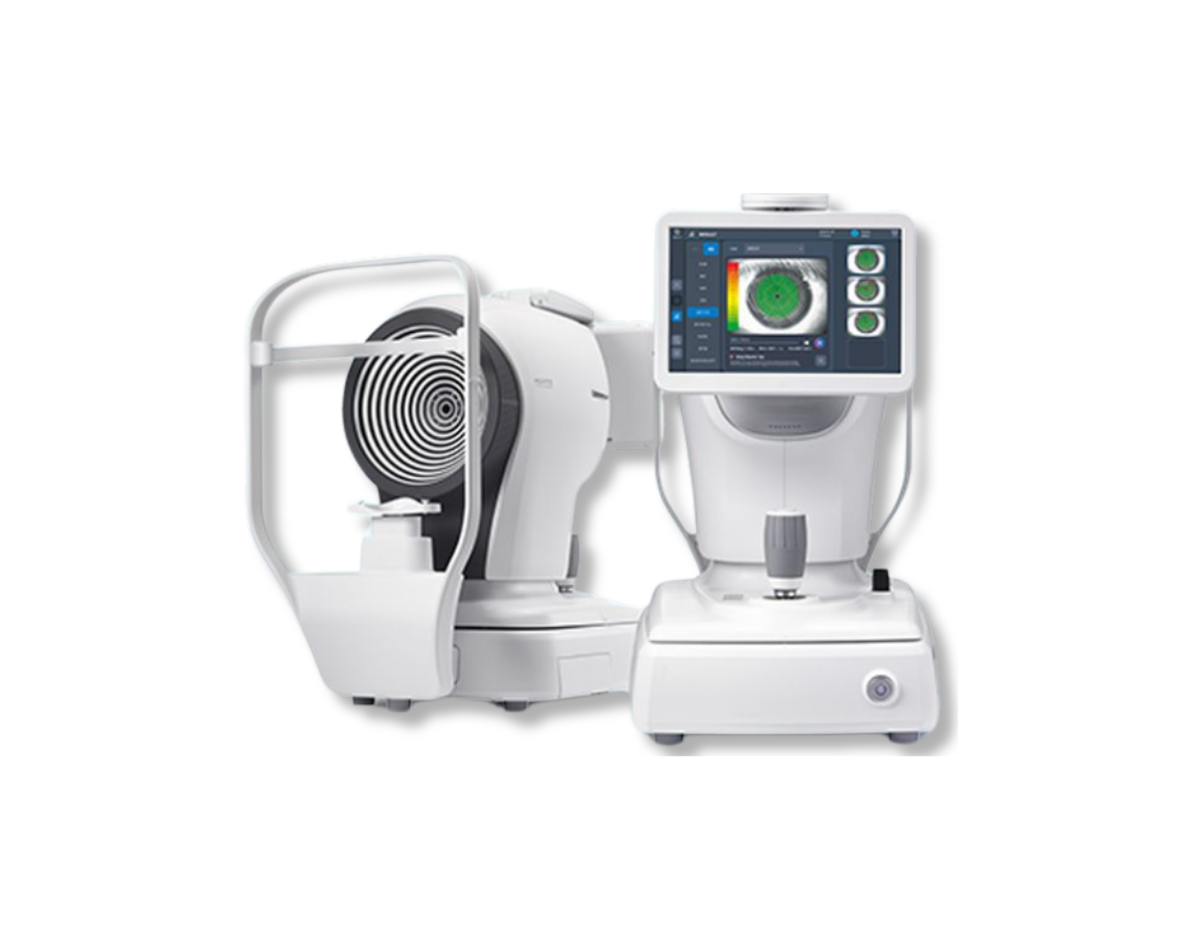
features:

Integrated Refraction & Keratometry
  • Provides objective refraction and keratometry measurements in one platform.
  • Establishes baseline refractive error and corneal curvature data for clinical interpretation.
Advanced 24-Ring Corneal Topography
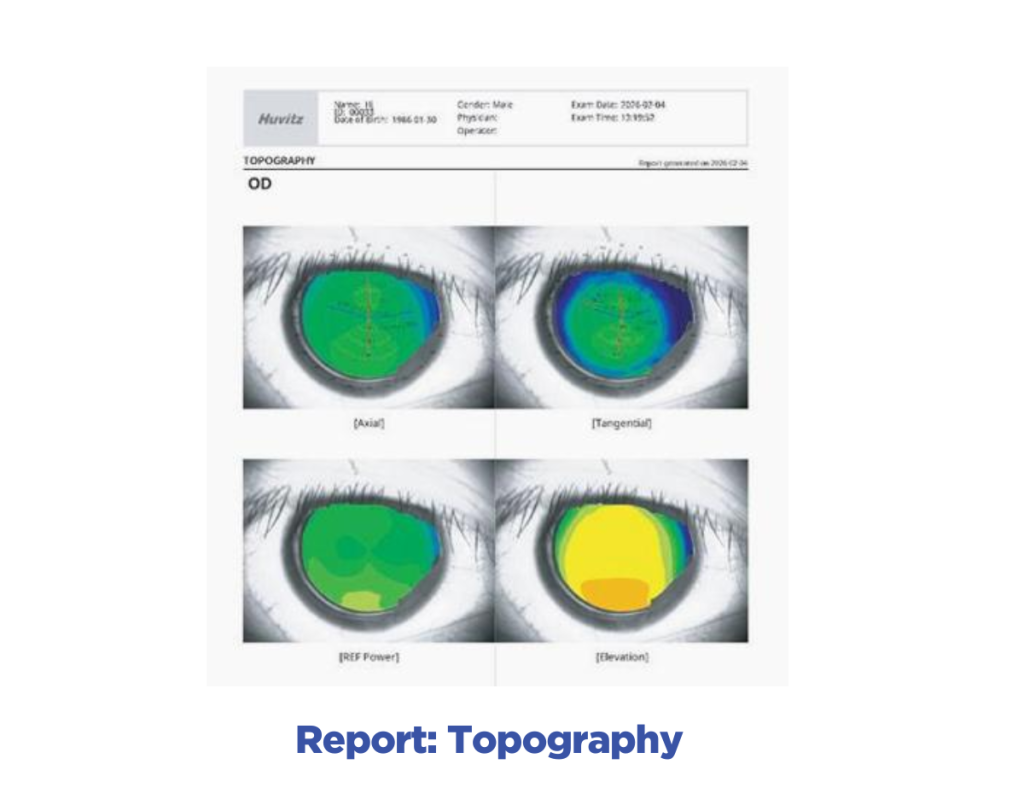
  • Uses 24-ring Placido topography with more than 100,000 analysis points for detailed anterior corneal surface assessment.
  • Provides Axial, Tangential, Elevation, and Refractive maps for evaluating corneal shape, curvature, irregularity, and power distribution.
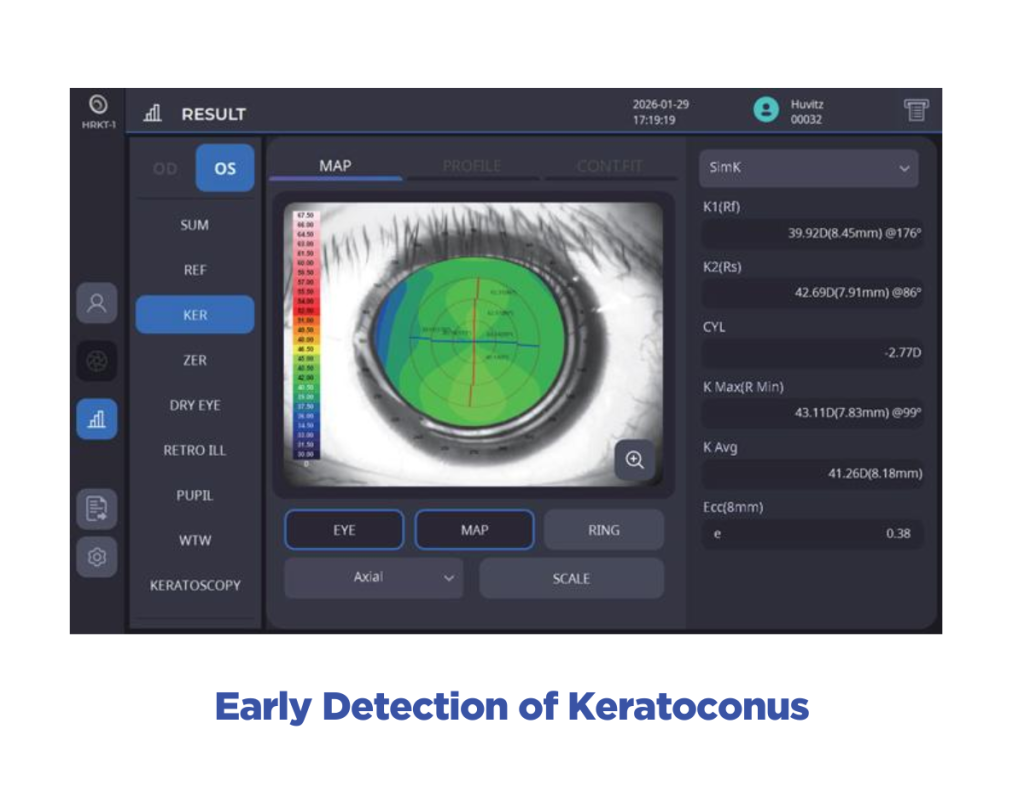
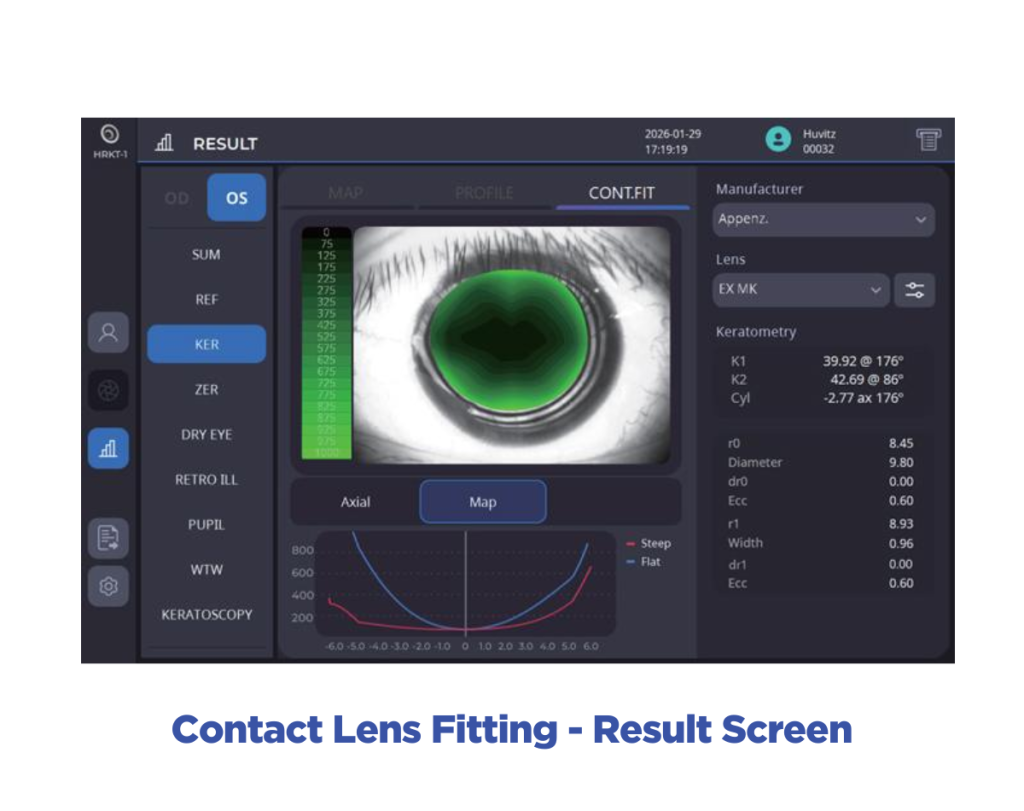
  • Supports corneal irregularity assessment, keratoconus risk screening, contact lens fitting, and Ortho-K evaluation.
Comprehensive Dry Eye Assessment
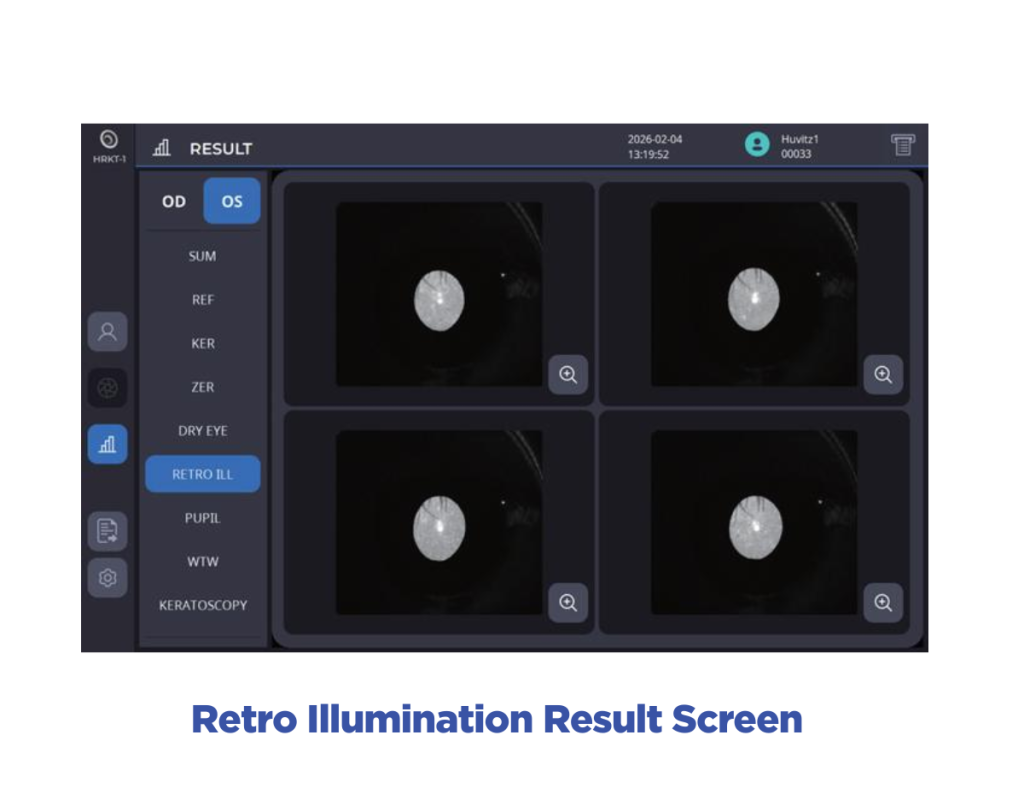
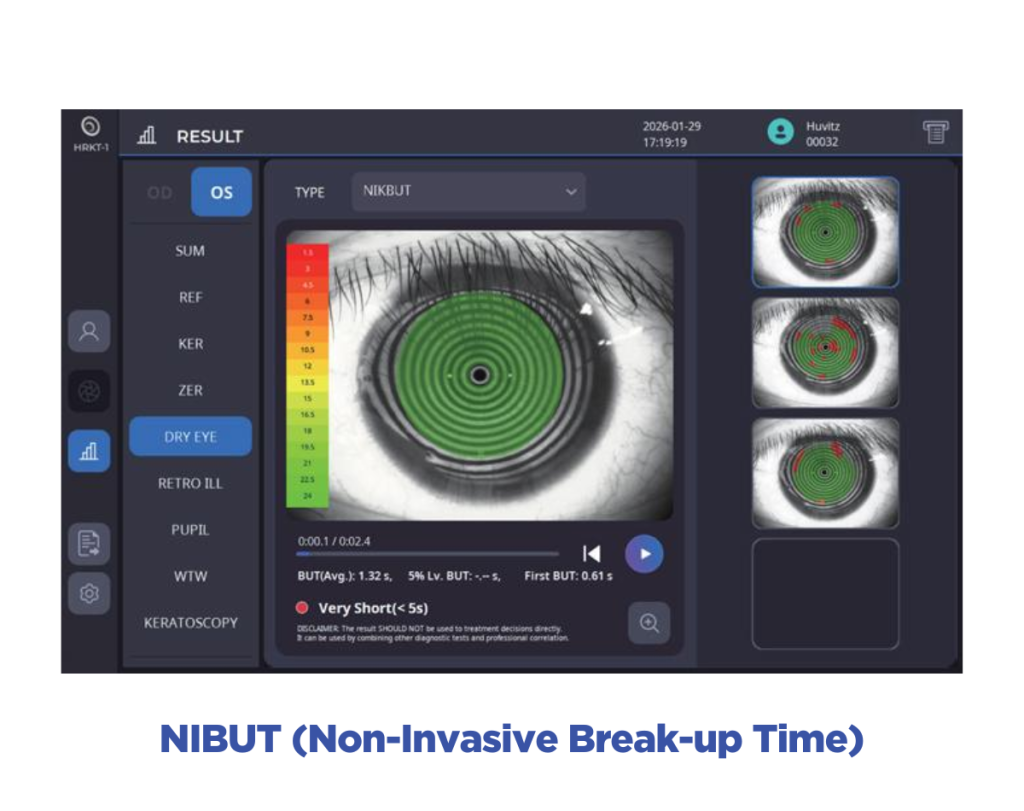
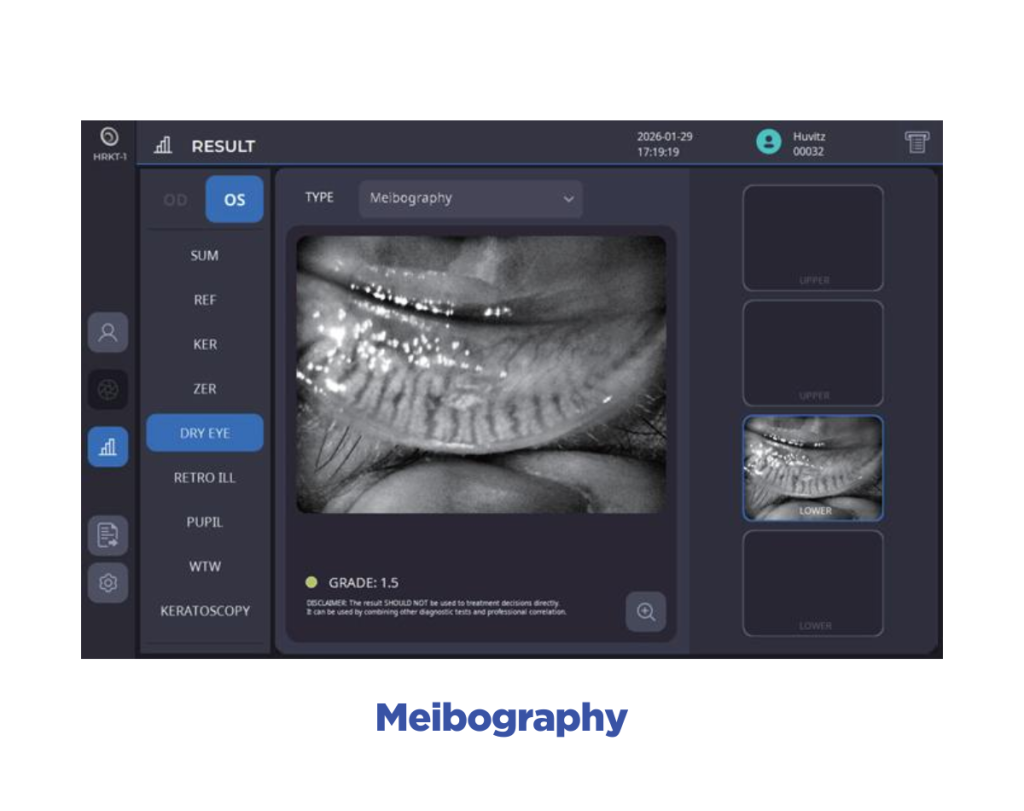
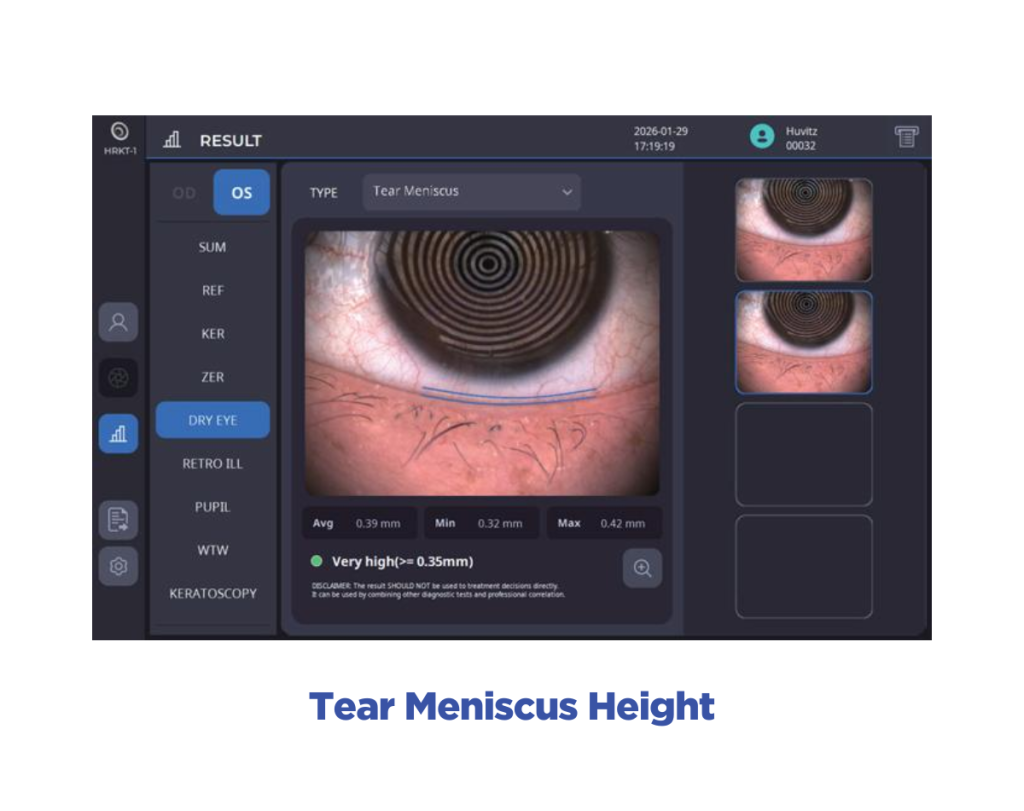
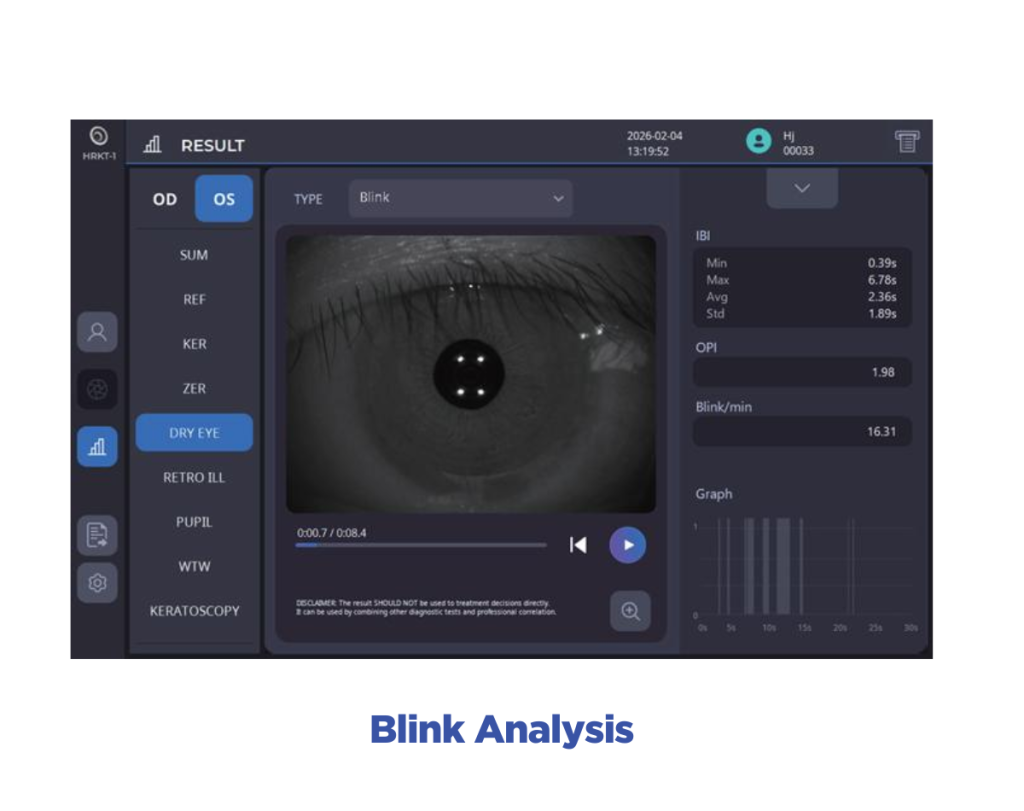
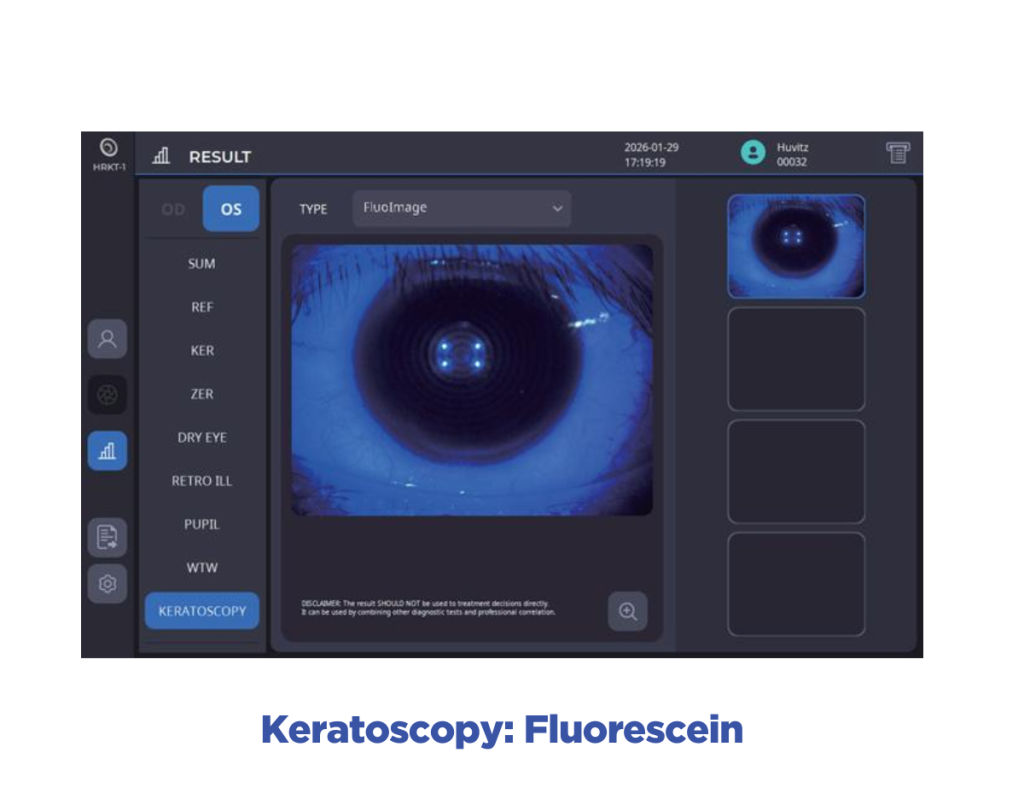
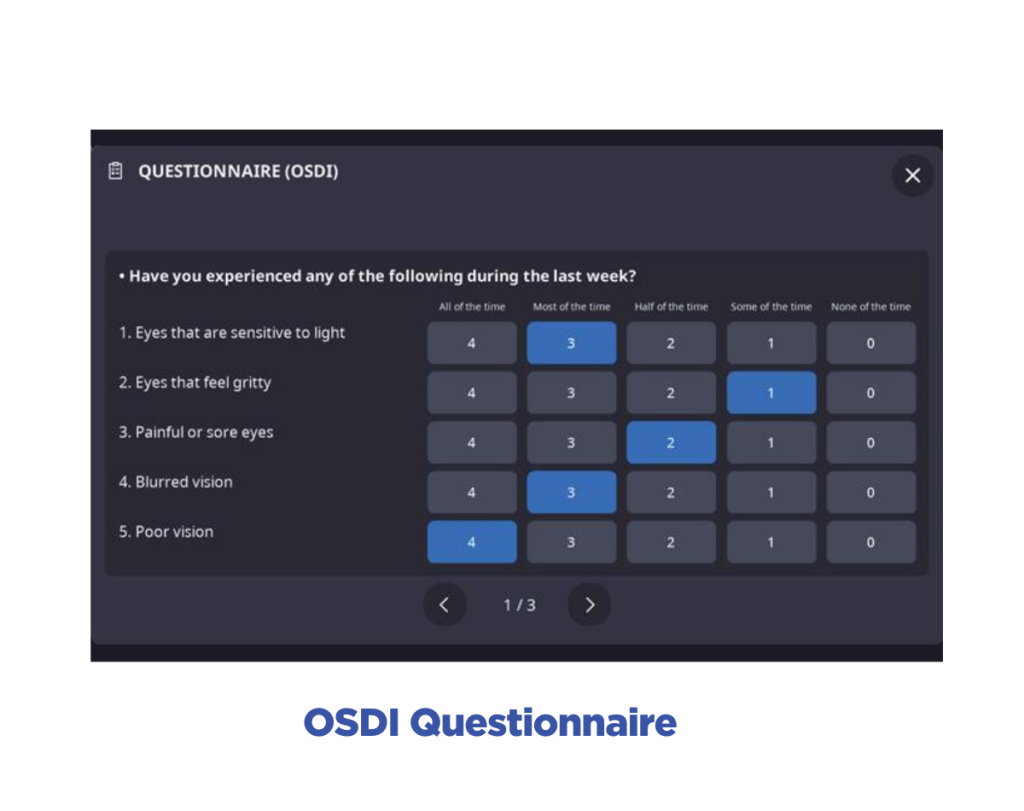
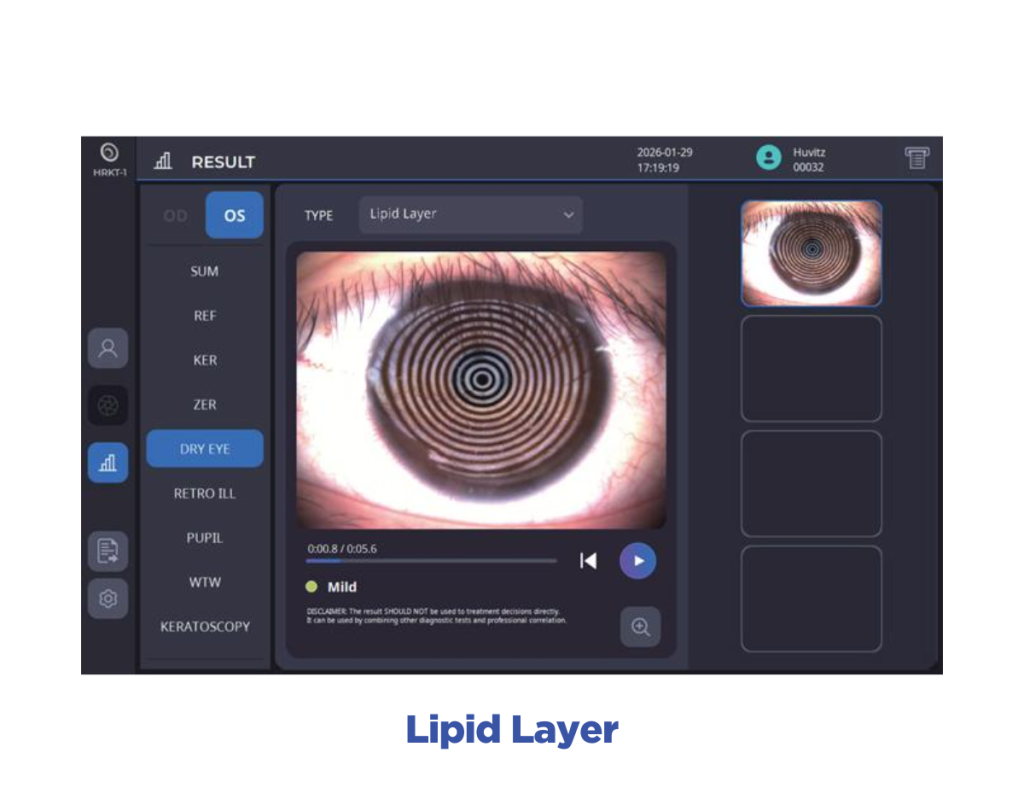
  • Includes OSDI, NIBUT, Lipid Layer Analysis, Tear Meniscus Height, Meibography, Blink Analysis, and Fluorescein Imaging.
  • Combines subjective symptoms with objective ocular-surface measurements for a more connected assessment.
Visual Quality & Zernike Analysis
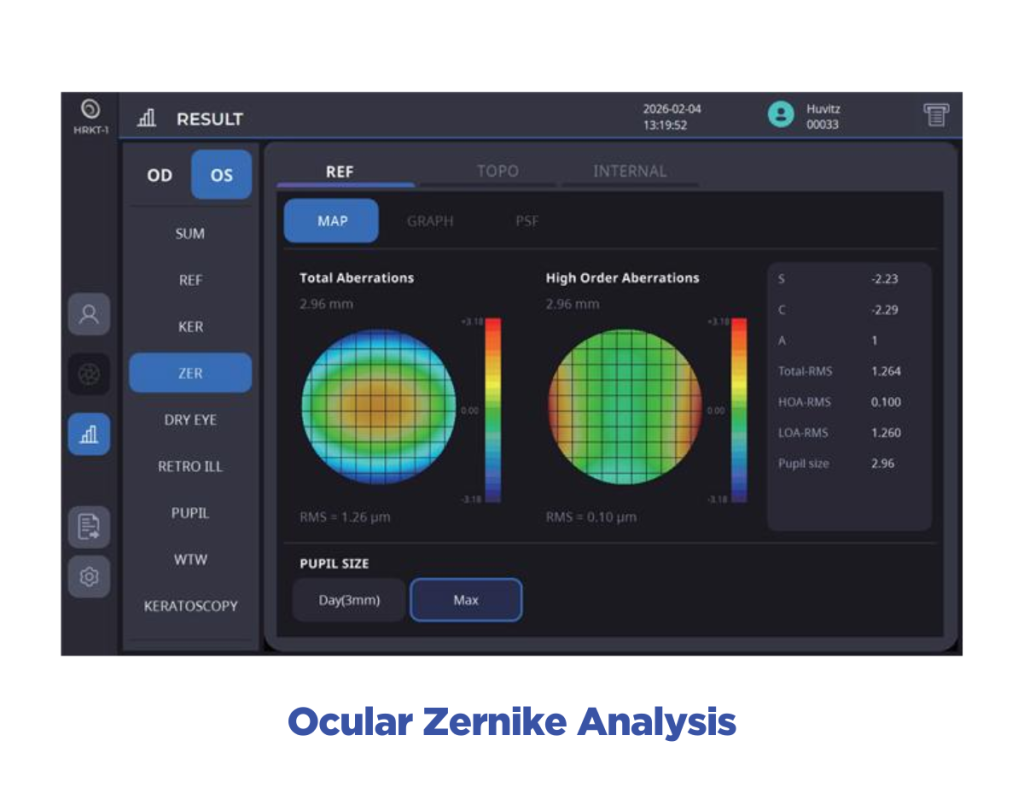
  • Evaluates total, corneal, and internal aberrations using wavefront-based analysis.
  • Provides RMS, higher-order aberration, and pupil-based data for additional context around glare, halos, and night-vision complaints.
Integrated Reporting
  • Organizes examination results to support clinical interpretation and patient consultation.
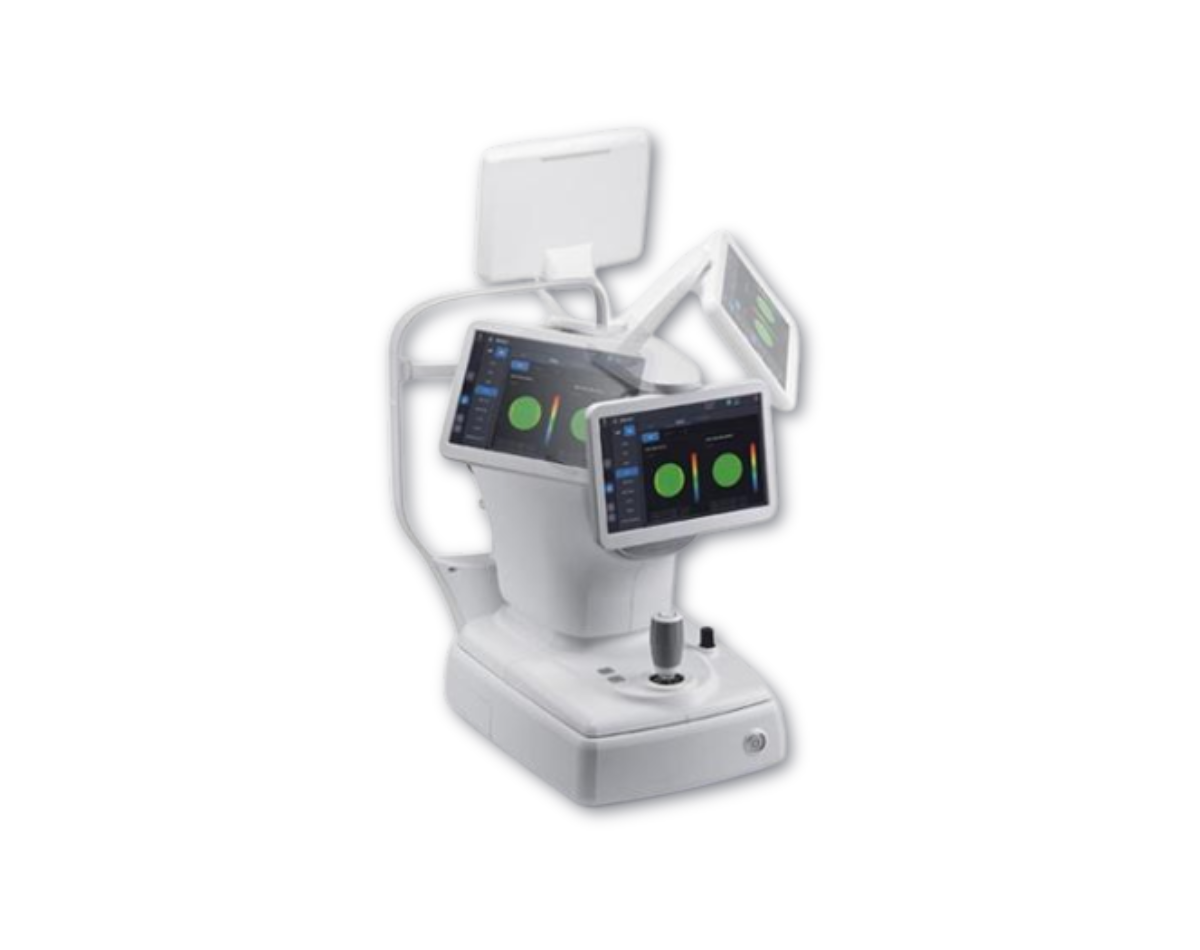
  • Helps connect refractive, corneal, dry eye, and visual-quality findings within one workflow.
One-Station Workflow
  • Combines Ref/K, corneal topography, dry eye assessment, and visual-quality analysis in one device.
  • Helps reduce patient movement between multiple instruments and simplify the examination workflow.